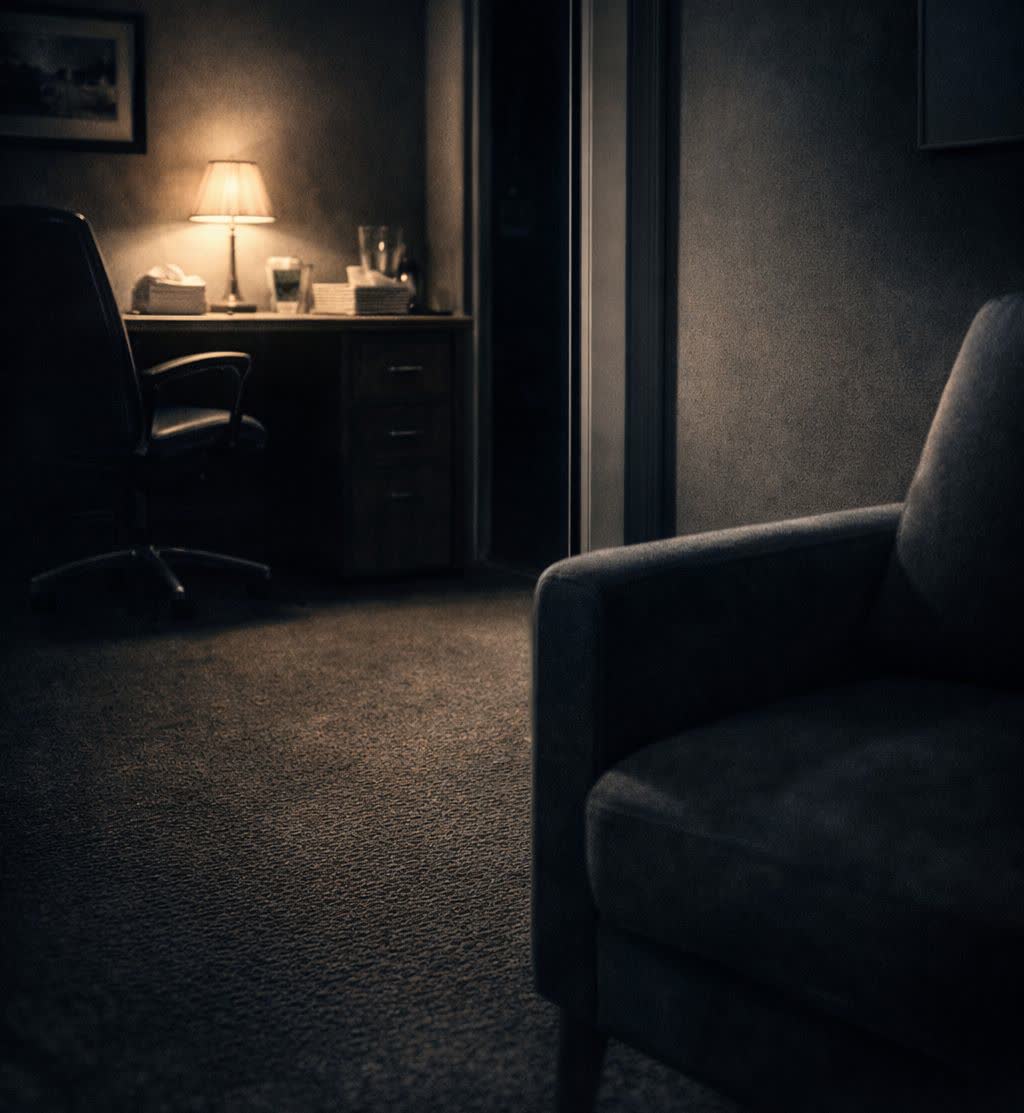
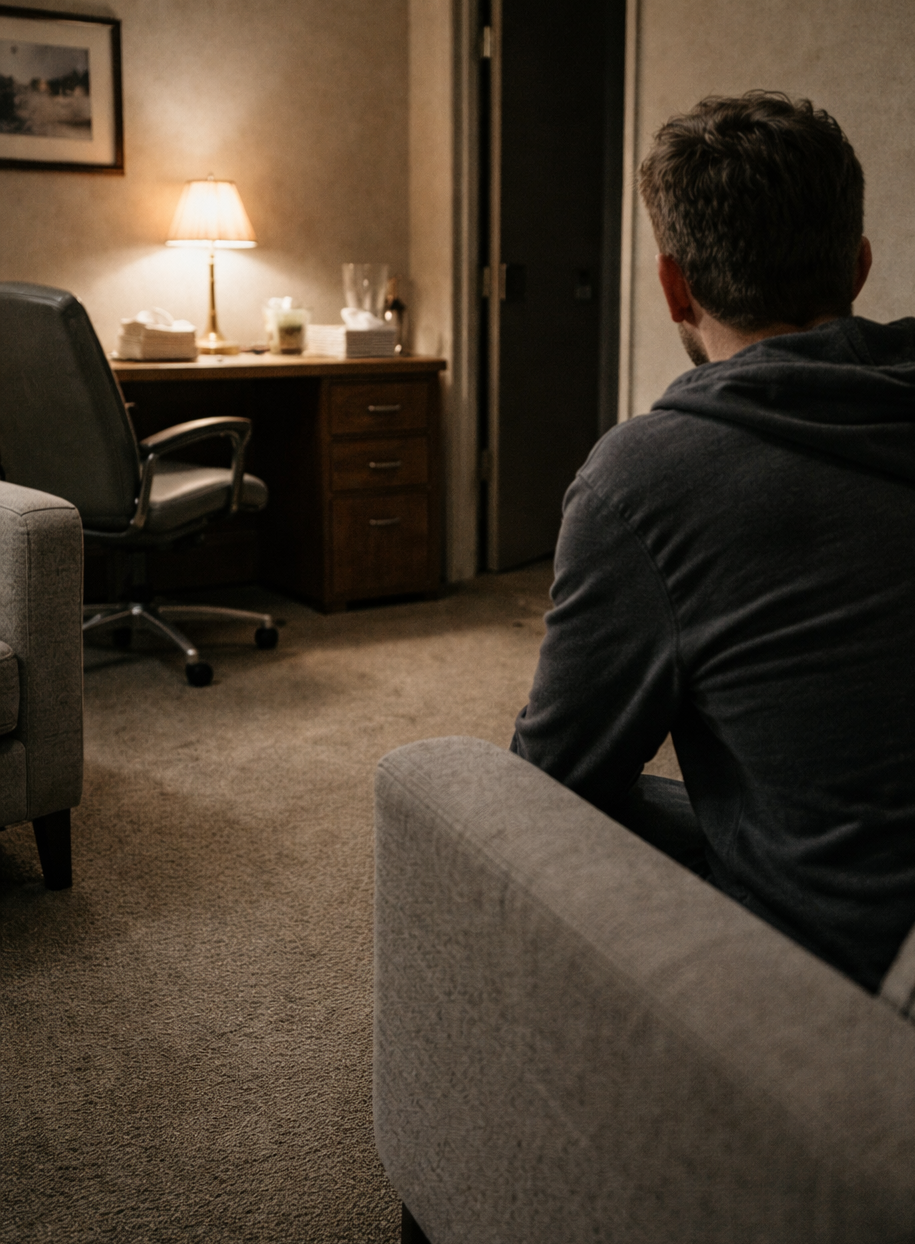
Therapy Room – Episode 18: The Supervisor

The Supervisor
I have been writing reports for years. Precise reports. Structured reports. Emotionless reports. Reports that must be submitted every week to “The Supervisor.” He always corrects them. Not grammar. Not formatting. Not professional structure. He corrects me. In the margins of my case notes, he writes: “Too empathetic.” “Unnecessary emotional response.” “A therapist must maintain control.” Each time I read those annotations, I silence something inside myself — like severing an exposed nerve that reacts too strongly to pain. Our treatment center is small. Old. The walls are painted a sterile white that turns into a dirty gray beneath fluorescent lights. The hallways smell of disinfectant, always mixed with something metallic. Something faintly reminiscent of dried blood. I know my colleagues. The nurses. The resident psychiatrist. The receptionist. But no one — not even the clinical director — knows anyone by the title of “Supervisor.” The first time I asked about him, they looked at me with polite confusion. “You work independently,” they said. But I had the emails. The edited documents. The tracked changes — red lines slicing through my sentences. Or at least… I believed I did.
The File That Never Existed
One night, after a heavy session with a patient who insisted a voice in his head was giving him instructions, I decided to review my archived reports. I sat in my office. Turned off the lights. Let the cold blue glow of my laptop screen flood the room. I opened the folder labeled: Supervisor Feedback It was empty. No edited files. No sent emails. No digital footprint. Nothing. Yet I remembered the handwriting — sharp, compressed, aggressive. Sentences that carried the distinct scent of judgment. Then I heard it. A voice. Behind me. Not from the hallway. Not from the door. From inside the sealed room. “You’re becoming too involved.” The tone was calm. Flat. Analytical. Exactly like the comments in my reports. I turned around. No one was there. But the mirror on the wall reflected something impossible. My reflection moved seconds after I did. And in that delay, his face was different. Harder. Colder. Eyes without tremor. His lips moved before mine did. “You are weakening.” My heart pounded, yet my body remained still — like a patient frozen in emotional paralysis. The reflection continued: “To survive, unnecessary parts must be removed.”
The File That Never Existed
A memory surfaced. Years ago, during residency, I treated a patient who took his own life after months of therapy. That night, I collapsed. I cried. My hands trembled. For the first time, I hated this profession. The next morning, I wrote a report — long, guilt-ridden, painfully honest. And that was the day the first note from “The Supervisor” appeared. “Remove emotion. You are a clinical instrument, not a human being.” To continue working, I accepted it. I accepted that if I wanted to endure the weight of other people’s trauma, I had to bury a part of myself. My mind — obedient and ruthless — found a solution. It created him. The Supervisor. But what began as a survival mechanism slowly evolved into something else. A judge. And then, an executioner. Every time I showed empathy in session, his voice sharpened. Every time a patient’s grief tightened my throat, he whispered: “Weakness.” And now, he was no longer satisfied with margins and annotations. He wanted control.
The Voice Takes Over
Read the Full Therapy Session
Gain access to all episodes, uncensored therapist notes, and classified conclusions.
Become VIPThis content is restricted to subscribers
FINAL
There was no voice left to resist. Only one to supervise.