THERAPHY ROOM: EPISODE 16 SESSION ZERO
THERAPHY ROOM SESSION ZERO
Once. A pause. Again. This building is supposed to be empty after working hours. A third knock — slower, heavier. A voice from behind the door spoke: “Doctor… It is your appointment.” The voice was familiar. Not from outside. From within. I returned my attention to the file. A new page had appeared. The ink was still fresh. It read: “Transition phase initiated. The therapist identity is resisting, but its defensive structure is weakening.” My hands trembled. If I did not write this — who did? And if I did write it — why did I not remember doing so? The recording device activated again without being touched. The same voice spoke: “Transition complete.” Another knock echoed through the door. This time, without hesitation, I responded: “Come in.”
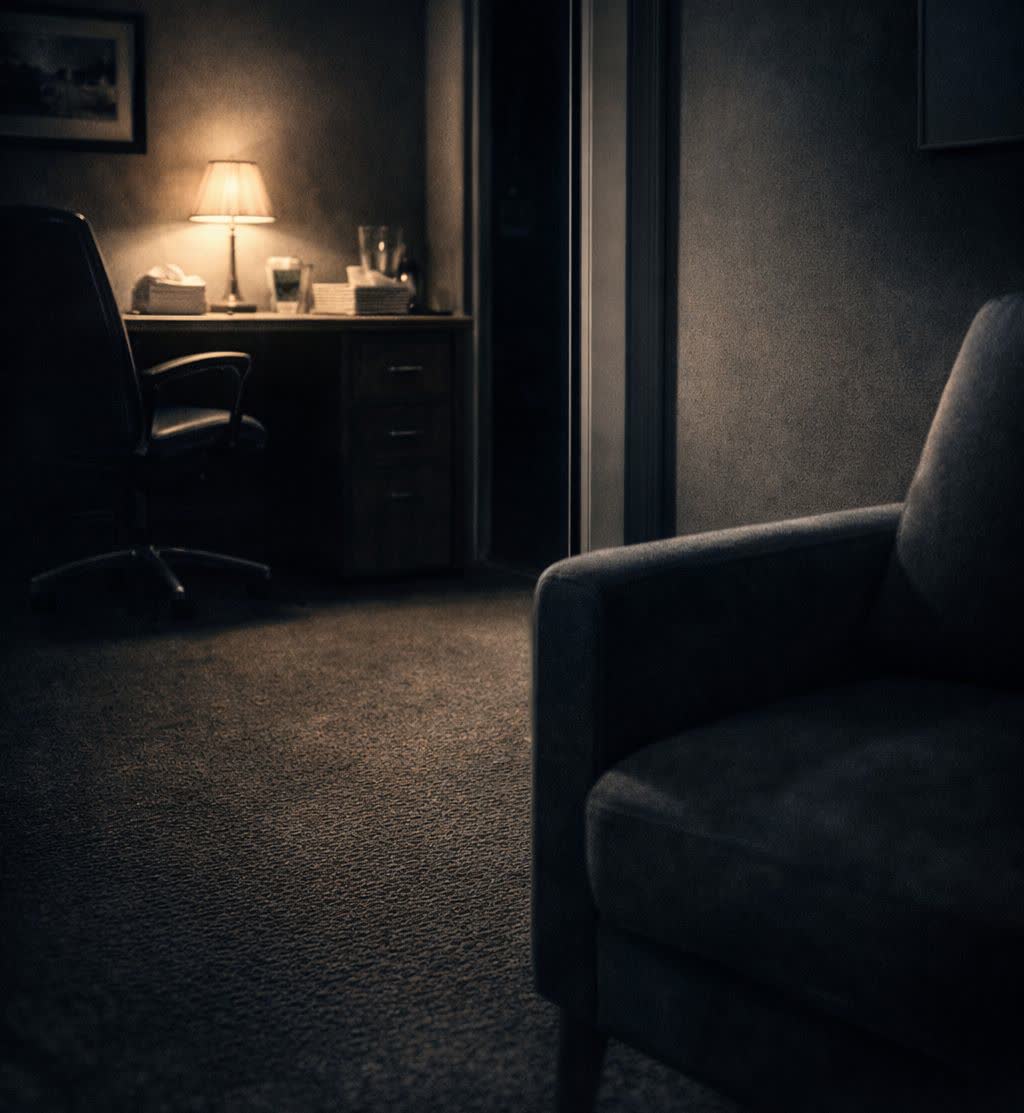
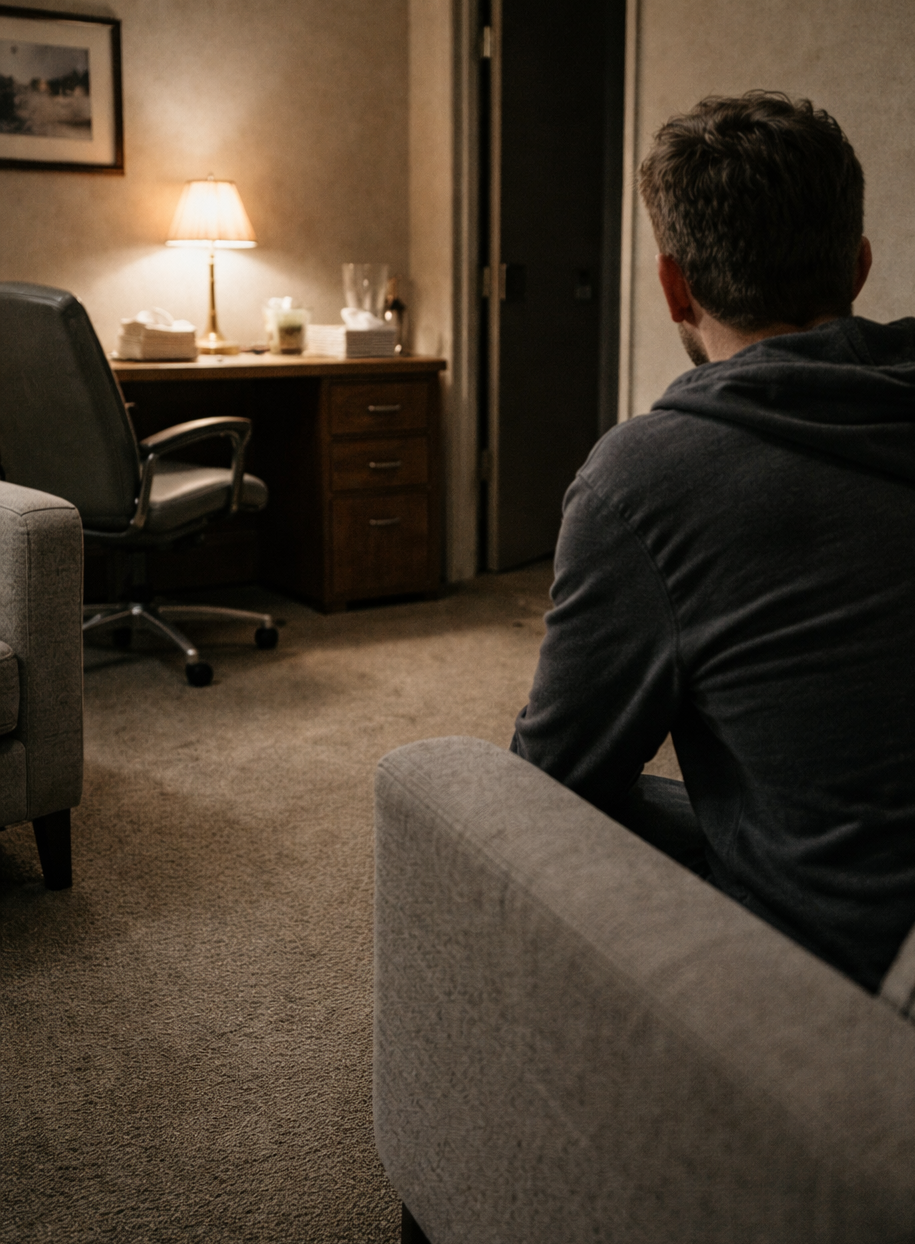
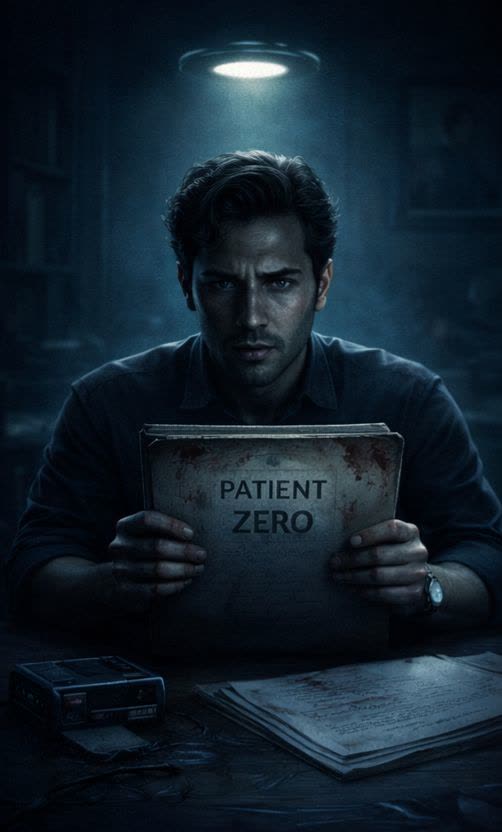
Tonight, after the last files were closed and the corridor lights shut down one by one, a silence settled over the building that felt different from ordinary silence. It was dense, heavy, and compressed — not merely absorbing sound, but slowing thought itself, forcing me to listen to my own heartbeat, which suddenly felt louder and more intrusive than it should have been. The therapy room has always been illuminated by a cold blue light. A deliberate choice, meant to reduce emotional stimulation and create controlled distance between patient and analyst. But tonight, that same light felt distorted — slightly deeper, darker, as if it was not illuminating the space but exposing something hidden beneath it. In the center of the desk — not at the edge, not buried beneath other documents, but exactly in the place that is always kept empty — there was a file. A leather cover. Worn. Fractured with thin cracks that suggested it had been handled repeatedly over time. On it, written in formal and precise lettering, were the words: Patient Number 0 The number zero does not exist in my archival system. It never has. Files begin with one; zero is not considered a starting point — it represents absence, not identity. Yet the file was there. When I placed my hand on its surface, an unnatural cold passed through my skin and into my bones — not a temperature change, but something intrinsic to the object itself. I opened it. On the first page, I saw my signature. Exact. Accurate. No deviation in stroke, no distortion in pressure. But the recorded date belonged to twelve years ago. Twelve years ago, I was not authorized to practice independently. I worked under supervision. My experience was limited. Doubt was part of my professional identity. Yet the report inside was structured, refined, and clinically mature — written as if authored by a mind that had already accumulated decades of experience. It stated: “Patient reports experiencing thoughts that do not feel self-generated; as if a voice thinks alongside them and occasionally decides before them.” Reading those words confronted me with something unsettling — the linguistic structure mirrored my current analytical style with alarming precision. Under diagnostic assessment, it read: “Dissociative Identity Structure — Latent Phase.” The pen slipped from my fingers. To verify authenticity, I accessed the digital archive. There was no record of Patient Number 0. No deleted entries. No hidden metadata. From an administrative standpoint, this file should not exist. But when I opened the drawer on the right side of my desk — something I had not opened in years — I found it. An old recording device. The same model I had abandoned five years ago. Attached to it was a small label: “Session Three — Zero” My hand hesitated. Then I pressed play. Static. Then my voice. Calm. Controlled. Professional. “Patient once again claims that the therapist appears in their dreams…” A pause. Then another voice. Not entirely different. Not entirely identical. A voice that would sound like mine if extracted from the deepest layers of my subconscious. It said: “Because you are not real.” My breath froze. The recording continued: “If I am not real, then who built this room?” The answer followed immediately: “I did.” I turned toward the wall mirror. I have always used this mirror to observe micro-expressions — subtle muscle movements, suppressed emotions, unspoken fear. But tonight, looking at my reflection created a sensation I had never experienced before. I stood still. The reflection moved with me. I blinked. The reflection blinked — but with a delay so slight it could almost be dismissed as perception error. I smiled. The reflection smiled. Yet something in its gaze had changed. Confidence. Absolute certainty. A knock struck the door.
Read the Full Therapy Session
Gain access to all episodes, uncensored therapist notes, and classified conclusions.
Become VIPThis content is restricted to subscribers