Therapy Room – Episode 14:The Boy Whose Drawings Show Tomorrow Patient Introduction

Patient Initials: A.M.
Age: 8
Referred by: Mother
“His drawings keep happening.” Our first session took place on a rainy afternoon. His mother walked in holding a blue folder so tightly her knuckles had turned pale. Before she even sat down, she said: “Please don’t tell me it’s imagination. I thought that too. But this keeps happening.” The boy sat beside her quietly. He wasn’t restless. He wasn’t shy. He wasn’t visibly anxious. His expression was unusually still — not blank, not distant — just calm in a way that didn’t quite belong to a child. There were black crayon stains on his right index finger. His mother opened the folder. Drawing One A four-way intersection. A red car flipped on its side. A gray sky, heavy with sharp dark strokes. She swallowed before speaking. “The next day… same intersection. Same red car. It flipped exactly like that.” The angle in the drawing wasn’t random. It wasn’t childlike exaggeration. It was specific. Drawing Two A man lying on the ground. A ladder beside him. At the top of the page, written in uneven handwriting: “Dad be careful.” His father works as an electrical technician. The following day, he fell from a ladder. The boy did not react while his mother told me this. No guilt. No fear. No excitement. Just stillness. Drawing Three A house. Darkened windows. One window marked with a bold X. I asked him what it meant. He looked directly at me and said: “Tomorrow.” He said it the way someone would comment on the weather forecast. Not dramatic. Not playful. Certain. I began forming clinical explanations in my mind. Anxiety. Catastrophic imagination. Coincidence shaped by parental fear. Then I asked him: “What do you feel when you draw?” He answered: “I see it.” “See what?” “Tomorrow.”
therapist notes
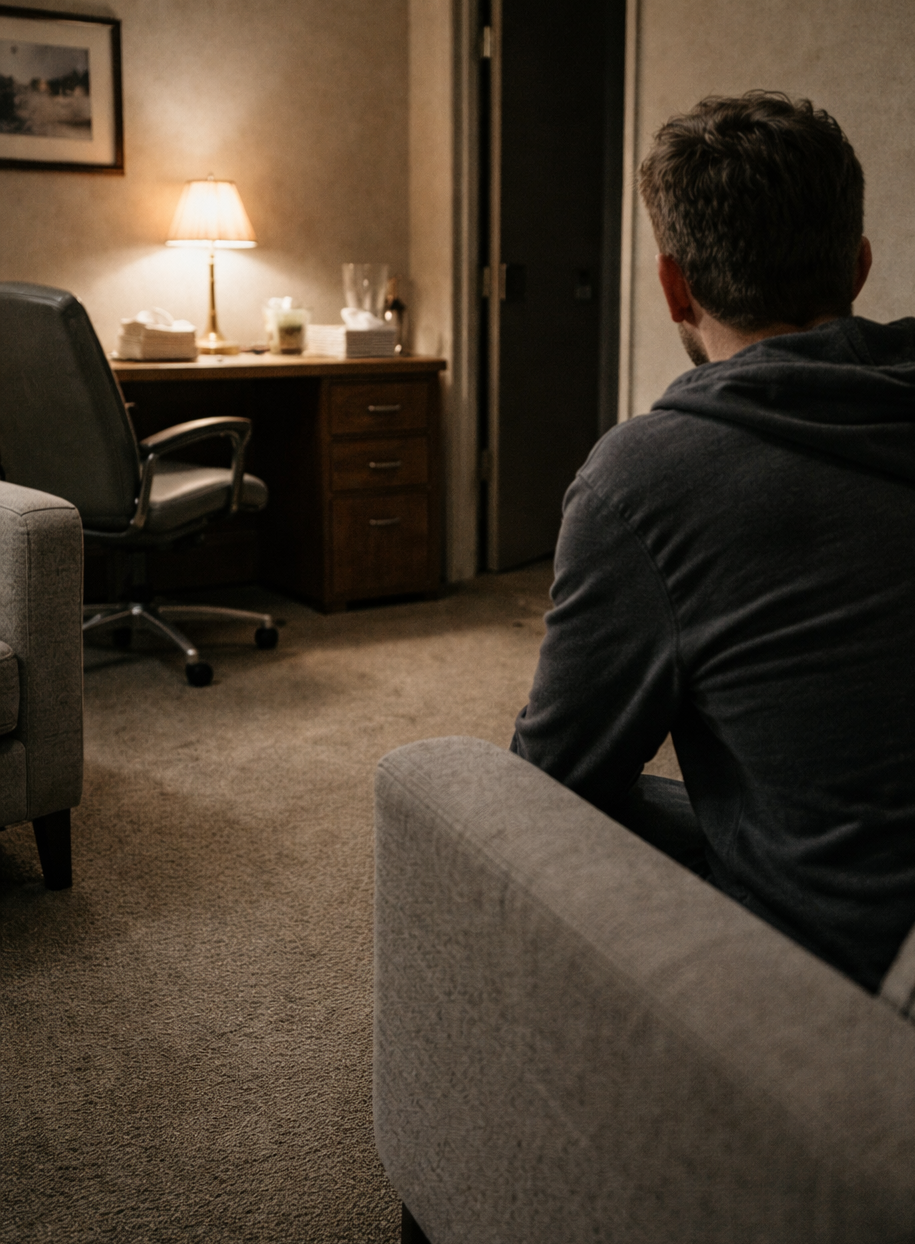
In the second session, he brought a drawing without being prompted. A room. Two chairs. A wooden desk. It looked uncomfortably familiar. On the desk, a coffee cup lay tipped over. Dark liquid spreading across the surface. Next to it, written in small letters: “It spills.” I smiled gently. “And where is this?” “Here.” The session continued normally. Later, while shifting a stack of files, my hand brushed against my coffee cup. It fell. The liquid spread across my desk. Same direction. Same pattern. He watched quietly and said: “I told you.” There was no triumph in his voice. Just confirmation. Pattern Escalation The drawings continued. An elevator stuck between floors. The next day, the elevator in their building malfunctioned. A ceiling light sparking. Hours later, a short circuit in their kitchen. Two men fighting outside a store. The following afternoon, a violent argument erupted in front of their home. Each time: Drawing. Silence. Occurrence. But Session Five changed everything. He drew a dark room. A man sitting behind a desk. Behind the man — a shadow. When I asked who the man was, he said: “You.” I asked about the shadow. He paused briefly. “It hasn’t come yet.”
Read the Full Therapy Session
Gain access to all episodes, uncensored therapist notes, and classified conclusions.
Become VIPThis content is restricted to subscribers