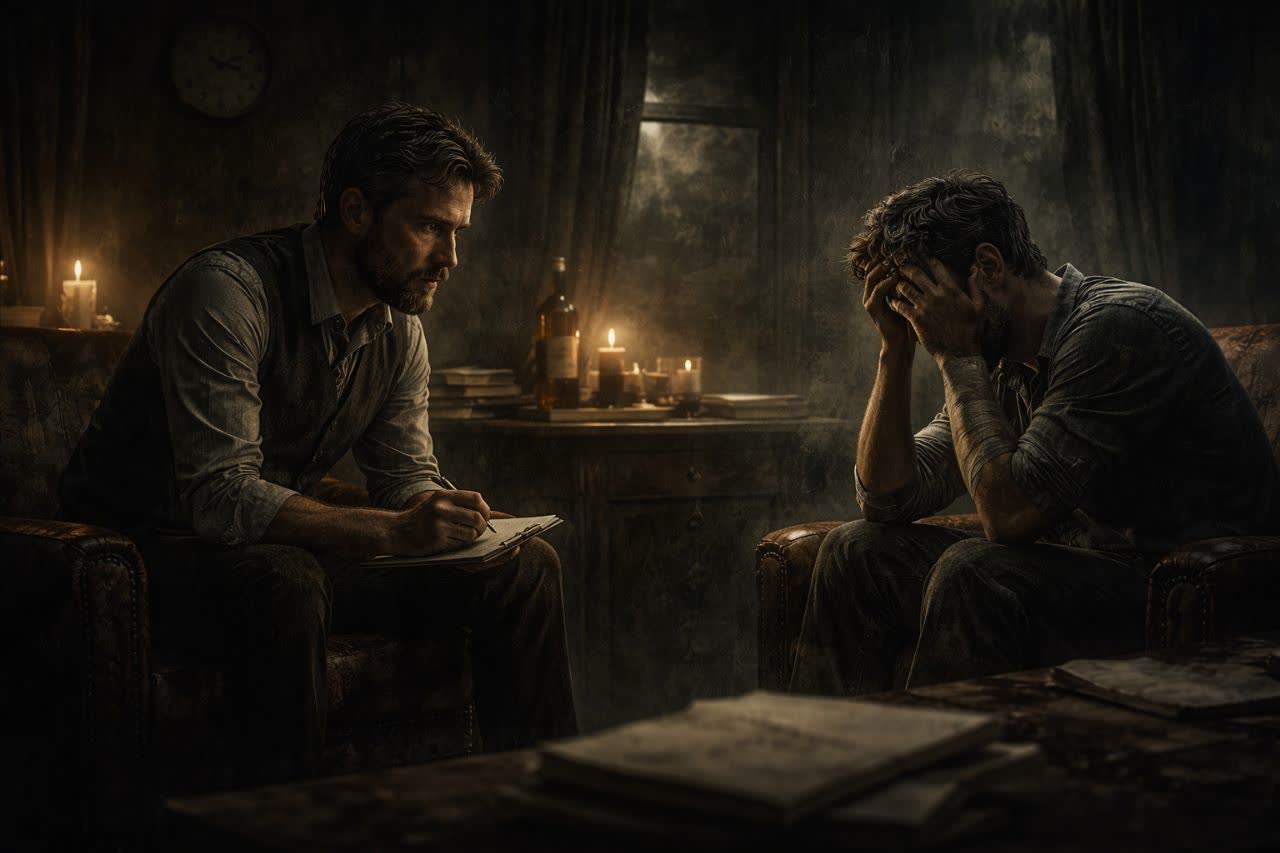
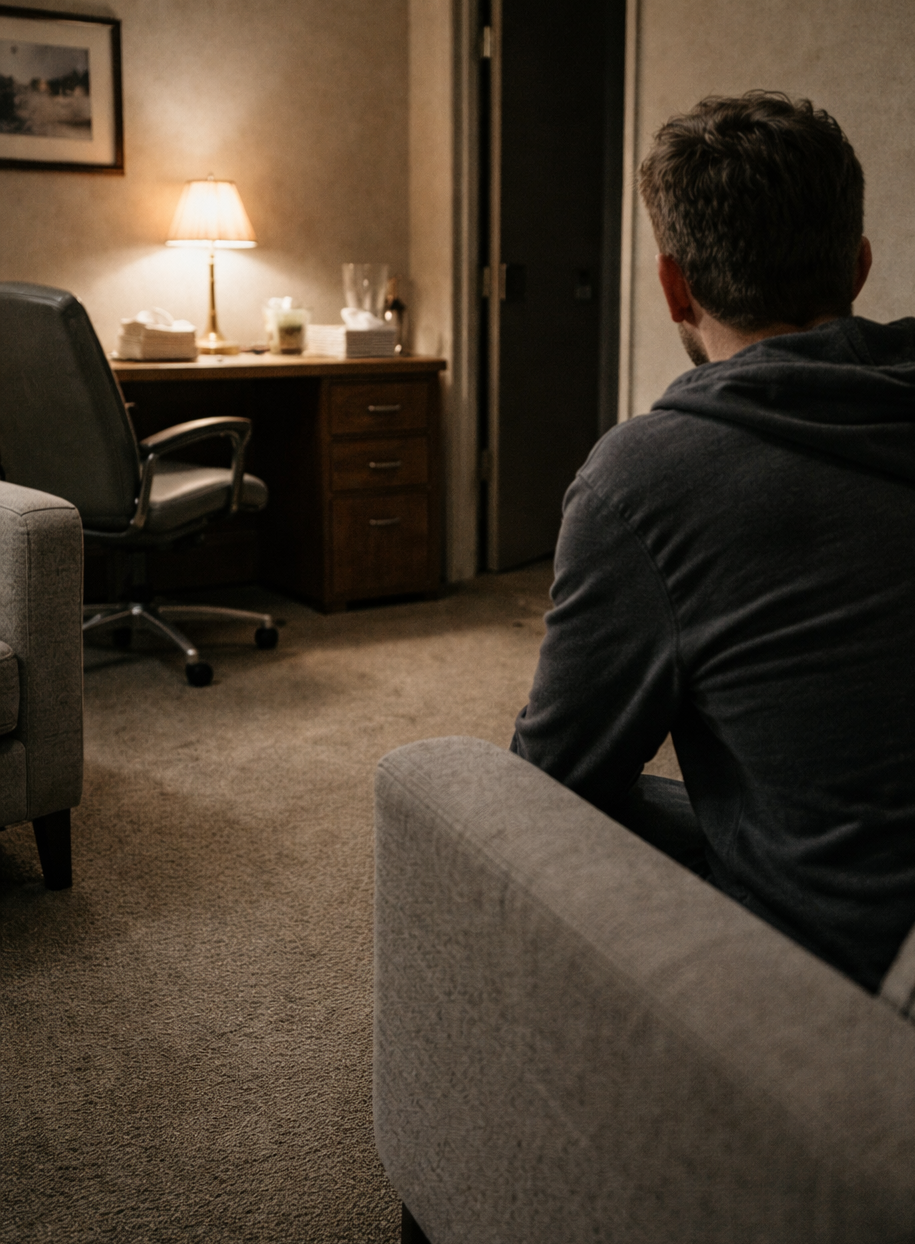
A Beautiful Mind – A Psychological Horror Story Inspired by Schizophrenia and Academic Paranoia
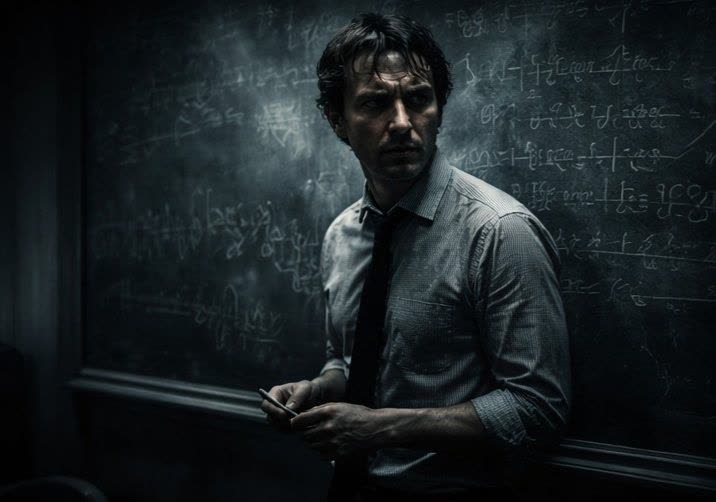
A Psychological Horror Story About Schizophrenia, Academic Paranoia, and the Collapse of Identity Location: Grand Lecture Hall – Northbridge University
Professor Adrian Vale had built his reputation on precision. In the world of mathematics and game theory, certainty could be proven, variables controlled, chaos reduced to elegant structure. For over two decades at Northbridge University, he had believed that the disciplined mind was immune to disorder. He was wrong. One late afternoon in the Grand Lecture Hall, just after his final lecture concluded and the sound of departing students faded into the long stone corridors of the university, Adrian remained standing at the podium, reviewing a theorem he had delivered hundreds of times before. The fading amber light of sunset stretched across the wooden seats, casting elongated shadows that blurred the edges of the room. That was when he felt it. Not a sound. Not movement. A presence. With the analytical instinct of a seasoned professor, he scanned the hall and noticed a figure seated in the final row — Seat 27. A young man in a gray coat. Still. Watching. Adrian cleared his throat. “The lecture is over.” The student did not move. He did not blink. He simply observed.
Location: Faculty Office – Corridor C
Sleep disturbance was Adrian’s first rational explanation. Academic stress. Overwork. Cognitive fatigue. But hallucinations are chaotic. This presence was not. Over the following days, the student appeared again — in the lecture hall, at the end of Corridor C, reflected faintly in the darkened window of Adrian’s faculty office. Each encounter lasted only seconds, yet each felt increasingly tangible. Then the whispering began. Not loud. Not intrusive. Precise. “You are slowing down.” “Your reasoning lacks sharpness.” “They notice.” The voice carried Adrian’s tone — but stripped of hesitation.
Location: Administration Building – Elevator
The psychological horror intensified not through violence, but through structure. Inside the mirrored elevator of the Administration Building, Adrian noticed something profoundly disturbing: his reflection blinked half a second after he did. And it smiled. He had not. The student began appearing closer now. No longer confined to the distance of lecture hall shadows, but standing several feet away, features sharpening with each encounter. The resemblance became undeniable. Same jawline. Same eyes. Same voice. But younger. Untouched by exhaustion. Unburdened by doubt. An optimized version. “Schizophrenia begins subtly,” Adrian whispered to himself one evening, recalling clinical literature he had once skimmed out of curiosity. Delusions of reference. Visual hallucinations. Identity fragmentation. But insight does not prevent deterioration.
Location: Grand Lecture Hall – Midnight
Location: Back Row – Seat 27
The following morning, Northbridge University published a feature highlighting Professor Vale’s “remarkable intellectual resurgence.” His lecture hall was full. His latest paper in theoretical game optimization was described as groundbreaking. Colleagues commented that he seemed revitalized. Sharper. Younger. Yet security reports occasionally mention something unusual in the Grand Lecture Hall after hours — a solitary man seated in the final row, motionless, watching the podium with hollow intensity. He never interrupts. He never speaks. He simply observes as the perfected Professor Adrian Vale teaches flawlessly under the warm stage lights. And if you remain long enough in that silent hall, you may begin to question which version is the hallucination. Because schizophrenia does not always destroy the mind. Sometimes, in the darkest corners of psychological horror, it replaces it.
Read the Full Therapy Session
Gain access to all episodes, uncensored therapist notes, and classified conclusions.
Become VIP