Date: February 12, 2026
Session Type: Individual – In-Person
Patient: Male, 34 years old
therapist notes
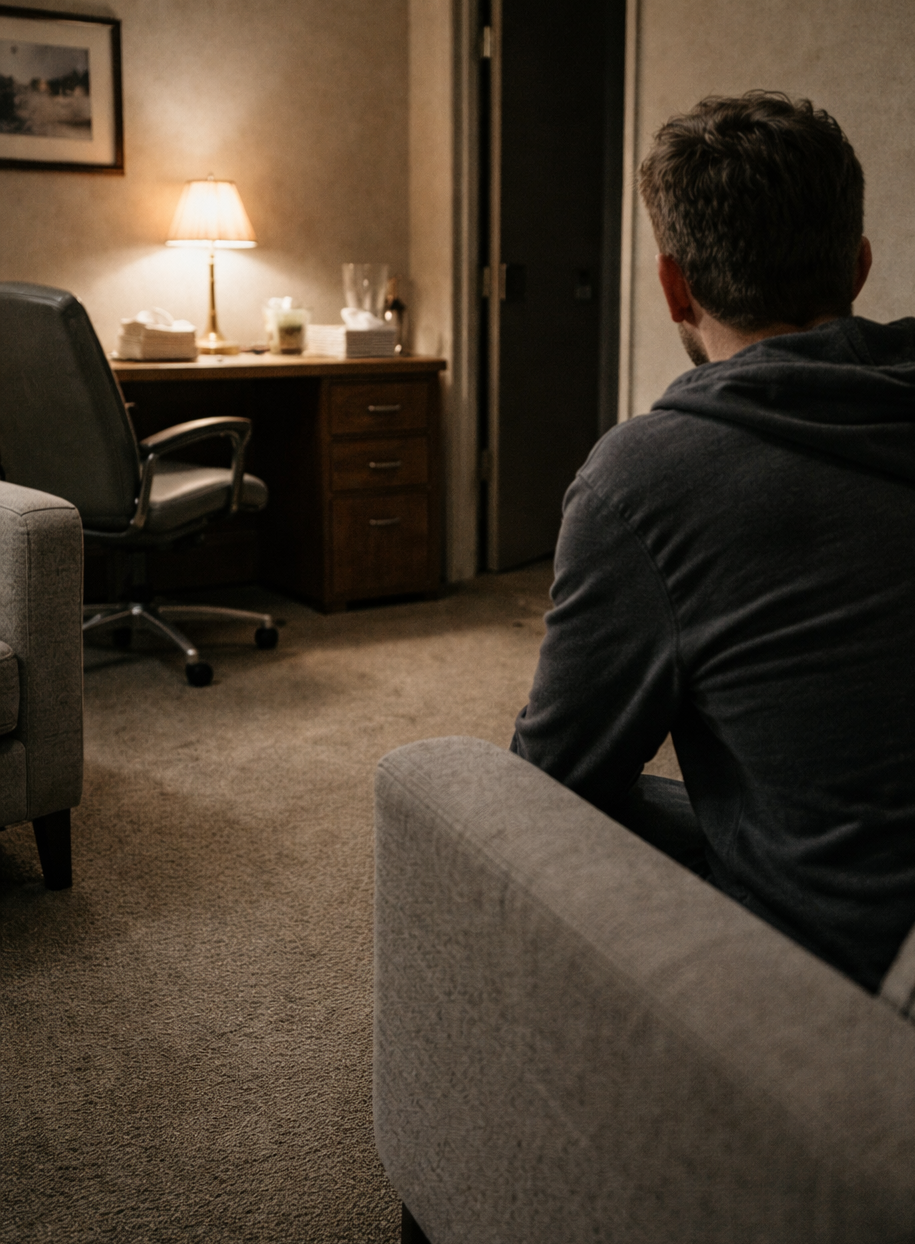
The patient presented with a primary complaint described as an intense fear of closing his eyes. He reports that for approximately three months, he has actively avoided shutting his eyes—even during routine activities such as washing his face or attempting sleep. In his own words: “Whenever I close my eyes, I feel like something is waiting on the other side… As if my looking at it is the only thing keeping it from being there.” Throughout the session, eye contact was sustained beyond normative comfort levels. Notably reduced blinking frequency was observed. When instructed to gently close his eyes for several seconds and focus on diaphragmatic breathing, he demonstrated immediate resistance. Jaw tension increased, respiration became shallow and rapid, and visible perspiration formed on his forehead. After approximately four seconds with his eyes closed, he abruptly reopened them and stated: “Did you hear that? It just moved closer.” Cognitive content reveals elements of anticipatory anxiety and intrusive ideation. However, what is clinically concerning is the degree of conviction in his narrative. The patient does not frame the experience as imagination or fear; rather, he describes it as conditional reality—activated by visual disengagement. When asked about the last time he slept peacefully, he paused for an extended duration before responding: “Before I realized that when I don’t see… I’m the one being seen.” At the conclusion of the session, he paused at the doorway and stared toward the upper corner of the ceiling without blinking. In a calm tone, he added: “You leave the light on when you’re alone too… don’t you?”
Read the Full Therapy Session
Gain access to all episodes, uncensored therapist notes, and classified conclusions.
Become VIPThis content is restricted to subscribers